We Got Inside Access to Balaji's Network School. Inside the Movement That Could Transform How Startups Build and Scale
For most startups, the first question is not where to incorporate. It is how to incorporate fast enough to close a funding round, sign customers, or hire employees without unnecessary friction.
Founders typically pick Delaware because everyone else does. They choose Singapore because it is startup-friendly. They go to the Cayman Islands because their investors prefer it. The decision is functional, not ideological.
But what if the premise itself changed? What if you could build a company within a digitally native community that shares your values, operates across multiple jurisdictions, crowdfunds physical territory, and eventually seeks diplomatic recognition as its own state?
That is the idea behind Balaji Srinivasan's Network State. And while it sounds like science fiction, the concept raises serious questions about how startups should think about governance, compliance, and the relationship between law and technology in the years ahead.
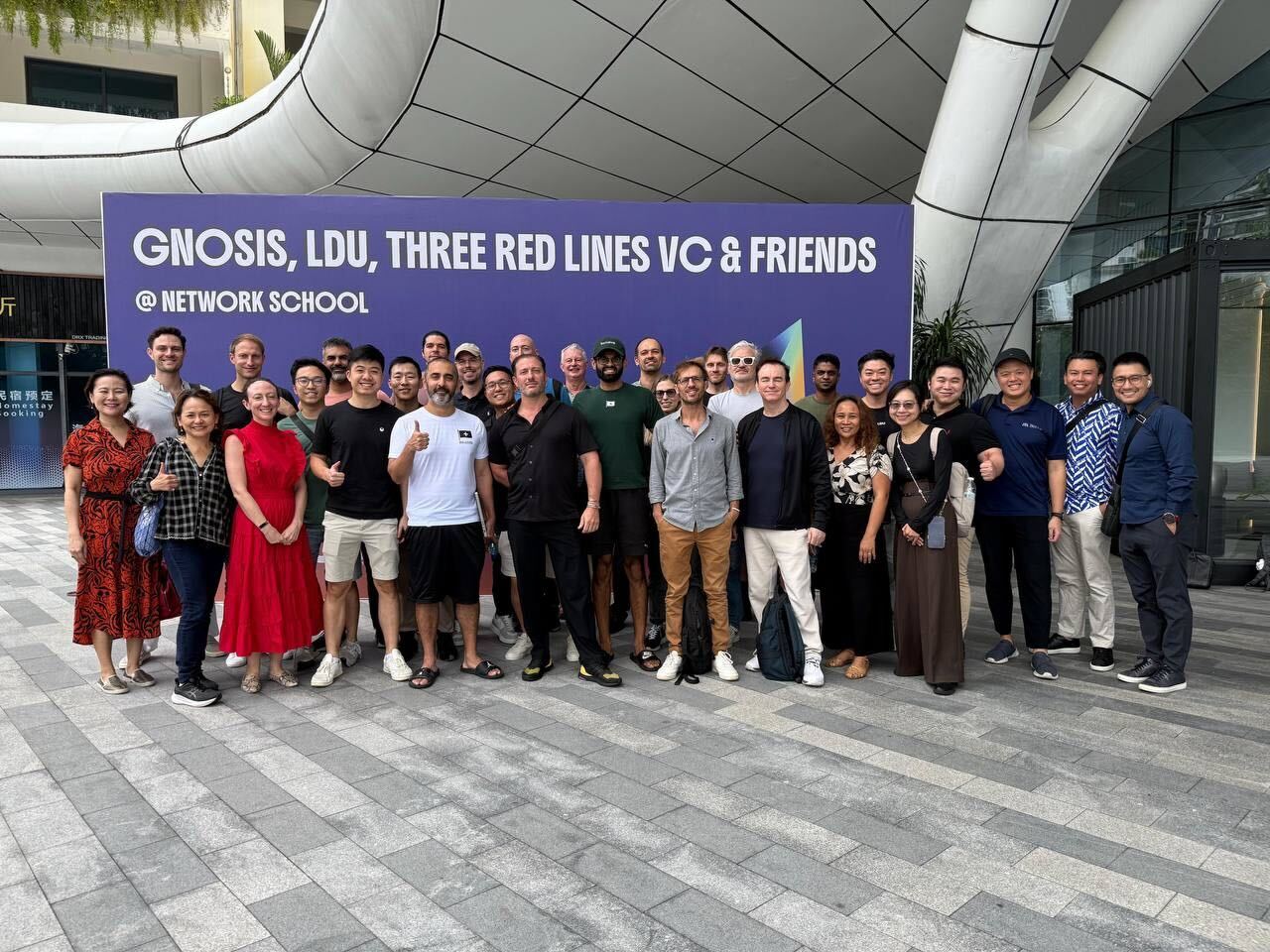
Recently, both co-founders of LDU, Daniel Kung and Daniel Lo, visited the Network School in Forest City, Malaysia and met Balaji Srinivasan. The experience prompted a deeper look at how this vision aligns with the challenges startups face today and how legal infrastructure needs to evolve to support genuinely new models of organization.
What is the Network State, and why does it matter for startups?
The Network State is not a country in the traditional sense. It is a digitally connected community that begins online, builds a shared mission, develops an integrated cryptocurrency, crowdfunds physical real estate across multiple locations worldwide, and eventually seeks diplomatic recognition from existing governments.
In Srinivasan's framework, a network state operates like a startup. It recruits members based on shared values rather than shared geography. It uses transparent, real-time metrics to prove legitimacy. It treats land acquisition like fundraising rounds. Instead of winning wars or claiming territory, it nests within existing legal systems and scales until it achieves sovereignty.
The model is compelling because it reframes citizenship and governance as opt-in, voluntary choices rather than accidents of birth or geography. Members choose to join because they align with the community's core mission, whether that is quantified health, radical privacy, carbon negativity, or something else entirely.
For startups, the concept is relevant because it mirrors how many already operate. Companies like Stripe, Shopify, and Deel already function across dozens of jurisdictions. Remote-first teams are geographically distributed but culturally aligned. DAOs coordinate globally using smart contracts and tokenomics. The infrastructure already exists. The question is whether the legal and political structures will catch up.
The innovation is real, but so are the practical challenges
The Network State concept is intellectually compelling, but implementation remains deeply complicated. Startups considering this model should understand both the promise and the constraints.
- Diplomatic recognition is a political process, not a technical one. Existing governments control recognition. Even if a network state reaches significant scale in population, financial reserves, and real estate holdings, recognition depends on political will, strategic interests, and bilateral relationships. No amount of blockchain verification or cryptographic proof changes that.
- Regulatory arbitrage has limits. Many startups already incorporate in favorable jurisdictions or use structures like holding companies and SPVs to optimize tax and legal exposure. But operating across multiple countries still means navigating multiple regulatory regimes, compliance obligations, and enforcement mechanisms. A network state does not eliminate these challenges. It potentially multiplies them.
- Governance and dispute resolution require institutions, not just code. Smart contracts are excellent for automating simple transactions. They are less effective at handling ambiguous situations, changing circumstances, or conflicts that require judgment. Even the most decentralized communities eventually need mechanisms to resolve disagreements, enforce decisions, and adapt rules. These mechanisms look a lot like traditional governance.
- Physical territory introduces traditional legal obligations. Once a network state crowdfunds real estate, it is subject to local property law, zoning regulations, tax codes, and enforcement. You cannot opt out of local jurisdiction simply because your community is digitally coordinated. The state you are physically located in still has authority over what happens on that land.
Despite these constraints, the Network State offers a useful framework for thinking about how startups can operate with more intentionality around governance, values alignment, and organizational structure.
How startups benefit from the Network State mindset
Even if the full vision of diplomatic recognition remains distant, startups can adopt elements of the network state model today to build stronger, more resilient organizations.
- Start with a clear moral innovation. Srinivasan emphasizes that every network state must coalesce around a compelling mission, something he calls the "one commandment." This is not marketing language. It is a defining principle that differentiates the community and attracts committed members. For startups, this translates to building around a real thesis, not just a market opportunity. Companies that stand for something specific attract better talent, more engaged customers, and stronger investor alignment.
- Use transparent metrics to build legitimacy. Network states rely on real-time dashboards showing population, financial reserves, compliance metrics, and progress toward their mission. Startups already do this internally with KPIs and OKRs. Making certain metrics public builds trust with stakeholders and creates accountability. Transparency reduces information asymmetry and allows the market to validate claims.
- Design governance early, not reactively. Most startups defer governance decisions until they become painful. Equity splits, decision-making authority, conflict resolution mechanisms, and exit procedures are often handled informally or left ambiguous. The network state model requires these structures to be explicit from the beginning. Founders' agreements, operating agreements, and governance frameworks are not just legal documents. They are the constitution of the organization.
- Opt for flexibility in jurisdictional strategy. Startups that think like network states can structure operations to optimize for specific legal outcomes without being locked into a single jurisdiction. Holding companies, international subsidiaries, remote teams, and distributed operations allow companies to access favorable regulatory environments while maintaining operational coherence. The key is designing for adaptability rather than permanence.
These principles are not hypothetical. They describe how high-performing startups already operate. The Network State concept simply makes the pattern explicit and extends it to its logical conclusion.
Where LDU's approach aligns with the Network State ethos
At LDU, we have been building legal infrastructure designed for startups that operate the way the Network State describes. Our model is based on three core features: legal AI that automates repetitive work, distributed teams that operate across multiple jurisdictions, and governance frameworks that prioritize clarity and flexibility from the start.
- Legal AI reduces friction in scaling across jurisdictions. The same way network states use blockchain for record-keeping and verification, we use AI to standardize contract review, compliance checks, and regulatory research across markets. This does not eliminate the need for human judgment. It allows legal teams to focus on high-value decisions rather than low-value repetition.
- Distributed operations mirror how network states function. LDU's team operates remotely across Asia, Europe, and North America. We serve clients in Singapore, Hong Kong, the US, and emerging markets. This structure gives us direct experience with the coordination challenges and compliance nuances that network states will face at scale. We design solutions that work across legal systems, not just within one jurisdiction.
- Governance as infrastructure, not an afterthought. The most common failure mode for startups is not product-market fit. It is internal misalignment when founders, investors, or key employees have different expectations that were never formalized. We treat governance the same way network states do: as foundational infrastructure that enables collective action. Clear equity structures, decision-making frameworks, and exit mechanisms prevent disputes and support growth.
The Network State is ultimately about building new institutions from first principles. LDU operates with the same mindset. We do not assume that existing legal structures are optimal just because they are familiar. We ask what startups actually need to operate effectively, then build tools and processes that deliver those outcomes.
What this means for the startup ecosystem
If the Network State model gains traction, the implications for startups will be significant.
- Competition between jurisdictions will intensify. Governments that want to attract network states and digital communities will need to offer favorable regulatory environments, predictable legal frameworks, and efficient dispute resolution. This creates pressure on legacy systems to modernize or risk losing talent and capital to more flexible alternatives.
- New organizational forms will emerge. The line between a company, a community, and a jurisdiction will become increasingly blurred. DAOs already experiment with governance structures that do not fit traditional corporate models. Network states extend this further. Startups will need legal advisors who understand how to structure entities that operate across these categories.
- Compliance will become more complex, not less. Operating in multiple jurisdictions increases regulatory exposure. Startups will need sophisticated compliance strategies that go beyond checking boxes. Real-time monitoring, automated reporting, and proactive risk management will become essential.
- Values alignment will matter more than geography. The best talent will increasingly choose where to work based on alignment with organizational values rather than physical location. Startups that articulate clear missions and demonstrate authentic commitment will have significant advantages in recruiting and retention.
These trends are already visible. The Network State concept simply accelerates and formalizes them.
How LDU supports startups navigating this landscape
LDU works with founders, scaleups, and Web3 companies to build legal infrastructure that supports growth across jurisdictions. We advise on corporate structuring, regulatory compliance, governance frameworks, and contract management for startups operating in complex, multi-jurisdictional environments.
Our team understands the practical challenges of distributed operations because we operate that way ourselves. We use legal AI to deliver faster, more consistent results without sacrificing quality. And we design governance systems that align stakeholders and prevent conflicts before they become existential.
Whether you are incorporating your first entity, expanding into new markets, preparing for fundraising, or exploring decentralized organizational models, strong legal infrastructure is one of the most important investments you can make.
Contact LDU for a free legal consultation. We help startups build with confidence in a world where the rules are changing faster than ever.
👉 Book now or email us at hello@lduasia.com





.jpg)